Sabtu, 29 Maret 2014

Wow! eBook: Learning Geospatial Analysis with Python - 6 new eBooks


Wow! eBook: Learning Geospatial Analysis with Python - 6 new eBooks

Link to Wow! eBook

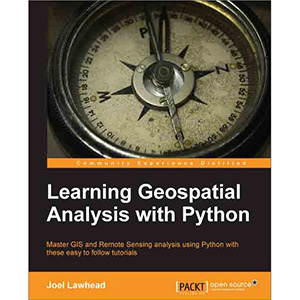
Learning Geospatial Analysis with Python

Posted: 29 Mar 2014 09:39 AM PDT

Book Description

Geospatial analysis is used in almost every field you can think of from medicine, to defense, to farming. It is an approach to use statistical analysis and other informational engineering to data which has a geographical or geospatial aspect. And this typically involves applications capable of geospatial display and processing to get a compiled and useful data.

“Learning Geospatial Analysis with Python” uses the expressive and powerful Python programming language to guide you through geographic information systems, remote sensing, topography, and more. It explains how to use a framework in order to approach Geospatial analysis effectively, but on your own terms.

“Learning Geospatial Analysis with Python” starts with a background of the field, a survey of the techniques and technology used, and then splits the field into its component speciality areas: GIS, remote sensing, elevation data, advanced modelling, and real-time data.

This book will teach you everything there is to know, from using a particular software package or API to using generic algorithms that can be applied to Geospatial analysis. This book focuses on pure Python whenever possible to minimize compiling platform-dependent binaries, so that you don’t become bogged down in just getting ready to do analysis.

“Learning Geospatial Analysis with Python” will round out your technical library with handy recipes and a good understanding of a field that supplements many a modern day human endeavors.

What you will learn from this book

  • Automate Geospatial analysis workflows using Python
  • Code the simplest possible GIS in 60 lines of Python
  • Mold thematic maps with Python tools
  • Get a hold of the various forms the geospatial data comes in
  • Produce elevation contours using Python tools
  • Create flood inundation models
  • Learn Real-Time Data tracking and apply it in storm chasing

Approach
This is a tutorial-style book that helps you to perform Geospatial and GIS analysis with Python and its tools/libraries. This book will first introduce various Python-related tools/packages in the initial chapters before moving towards practical usage, examples, and implementation in specialized kinds of Geospatial data analysis.

Who this book is written for
This book is for anyone who wants to understand digital mapping and analysis and who uses Python or another scripting language for automation or crunching data manually.This book primarily targets Python developers, researchers, and analysts who want to perform Geospatial, modeling, and GIS analysis with Python.

Book Details

  • Paperback: 364 pages
  • Publisher: Packt Publishing (October 2013)
  • Language: English
  • ISBN-10: 1783281138
  • ISBN-13: 978-1783281138
Note: There is a file embedded within this post, please visit this post to download the file.

Related Books

The post Learning Geospatial Analysis with Python appeared first on Wow! eBook.

Learning Windows 8 Game Development

Posted: 29 Mar 2014 09:36 AM PDT

Book Description

With the recent success of a lot of smaller games, game development is quickly becoming a great field to get in to. Mobile and PC games are on the rise, and having a way to create a game for all types of devices without rewriting everything is a huge benefit for the new Windows 8 operating system. In this book, you will learn how to use cutting-edge technologies like DirectX and tools that will make creating a game easy. This book also allows you to make money by selling your games to the world.

Learning Windows 8 Game Development teaches you how to create exciting games for tablets and PC on the Windows 8 platform. Make a game, learn the techniques, and use them to make the games you want to play. Learn about graphics, multiplayer options, how to use the Proximity + Socket APIs to add local multiplayer, how to sell the game outright, and In-App Purchases.

Learning Windows 8 Game Development guides you from the start of your journey all the way to developing games for Windows by showing you how to develop a game from scratch and sell it in the store.With Learning Windows 8 Game Development, you will learn how to write the code required to set everything up, get some graphics on screen, and then jump into the fun part of adding gameplay to turn a graphics sample into a proper game. From there, you'll look at how to add awesome features to your game like networking, motion controls, and even take advantage of new Windows 8 features like live tiles and sharing to make your players want to challenge their friends and keep playing.

This book wraps up by covering the only way a good game can finish development: by shipping the game on the Windows Store. You'll look at the things to remember to make certification painless and some great tips on how to market and sell your game to the public.

What you will learn from this book

  • Render sprites in 2D
  • Use touch, gamepad, mouse, and keyboard input to control the game
  • Learn the techniques to add multiplayer to your game
  • Add competition with accessible Windows 8 features
  • Use motion sensors and GPS to add unique gameplay
  • Master techniques to maximise your Windows Store effectiveness
  • Learn tips and tricks to pass store certification
  • Kick-start the next stage of gaming with 3D rendering

Approach
A standard practical tutorial running people through Windows 8 RT with a specific focus on game development is the approach chosen here. This type of approach will more likely appeal to an audience that is in need of a structured guide that they can emulate and learn from, unlike the usual reference text available in the market.

Who this book is written for
Learning Windows 8 Game Development is for any developer looking to branch out and make some games. It's assumed that you will have an understanding of C++ and programming. If you want to program a game, this book is for you, as it will provide a great overview of Direct3D and Windows 8 game development and will kick-start your journey into 3D development.

Book Details

  • Paperback: 244 pages
  • Publisher: Packt Publishing (October 2013)
  • Language: English
  • ISBN-10: 1849697442
  • ISBN-13: 978-1849697446
Note: There is a file embedded within this post, please visit this post to download the file.

Related Books

The post Learning Windows 8 Game Development appeared first on Wow! eBook.

Metasploit Penetration Testing Cookbook, 2nd Edition

Posted: 29 Mar 2014 09:33 AM PDT

Book Description

Metasploit software helps security and IT professionals identify security issues, verify vulnerability mitigations, and manage expert-driven security assessments. Capabilities include smart exploitation, password auditing, web application scanning, and social engineering. Teams can collaborate in Metasploit and present their findings in consolidated reports. The goal of the software is to provide a clear understanding of the critical vulnerabilities in any environment and to manage those risks.

Metasploit Penetration Testing Cookbook, Second Edition contains chapters that are logically arranged with an increasing level of complexity and thoroughly covers some aspects of Metasploit, ranging from pre-exploitation to the post-exploitation phase. This book is an update from version 4.0 to version 4.5. It covers the detailed penetration testing techniques for different specializations like wireless networks, VOIP systems, and the cloud.

Metasploit Penetration Testing Cookbook, Second Edition covers a number of topics which were not part of the first edition. You will learn how to penetrate an operating system (Windows 8 penetration testing) to the penetration of a wireless network, VoIP network, and then to cloud.

The book starts with the basics, such as gathering information about your target, and then develops to cover advanced topics like building your own framework scripts and modules. The book goes deep into operating-systems-based penetration testing techniques and moves ahead with client-based exploitation methodologies. In the post-exploitation phase, it covers meterpreter, antivirus bypass, ruby wonders, exploit building, porting exploits to the framework, and penetration testing, while dealing with VOIP, wireless networks, and cloud computing.

This book will help readers to think from a hacker’s perspective to dig out the flaws in target networks and also to leverage the powers of Metasploit to compromise them. It will take your penetration skills to the next level.

What you will learn from this book

  • Set up a complete penetration testing environment using Metasploit and virtual machines
  • Discover how to penetration test popular operating systems such as Windows 8
  • Get familiar with penetration testing based on client side exploitation techniques with detailed analysis of vulnerabilities and codes
  • Build and analyze meterpreter scripts in Ruby
  • Learn penetration testing in VOIP, WLAN, and the cloud from start to finish including information gathering, vulnerability assessment, exploitation, and privilege escalation
  • Make the most of the exclusive coverage of antivirus bypassing techniques using Metasploit
  • Work with BBQSQL to analyze the stored results of the database

Approach
This book follows a Cookbook style with recipes explaining the steps for penetration testing with WLAN, VOIP, and even cloud computing. There is plenty of code and commands used to make your learning curve easy and quick.

Who this book is for
This book targets both professional penetration testers as well as new users of Metasploit, who wish to gain expertise over the framework and learn an additional skill of penetration testing, not limited to a particular OS. The book requires basic knowledge of scanning, exploitation, and the Ruby language.

Book Details

  • Paperback: 320 pages
  • Publisher: Packt Publishing; 2nd Edition (October 2013)
  • Language: English
  • ISBN-10: 1782166785
  • ISBN-13: 978-1782166788
Note: There is a file embedded within this post, please visit this post to download the file.

Related Books

The post Metasploit Penetration Testing Cookbook, 2nd Edition appeared first on Wow! eBook.

Debian 7: System Administration Best Practices

Posted: 29 Mar 2014 09:31 AM PDT

Book Description

Debian is one of the most popular Linux-based operating systems, with over 37 thousand software packages available in several architectures. Debian 7 is the latest version of this universal operating system and provides the foundation for thousands of web servers. It is easy to install, stable, and provides mechanisms for system security.

Debian 7: System Administration Best Practices provides valuable background information, tips, and advice on the major areas of installing, maintaining, and administering Debian Linux, from single systems to clusters. Learn what makes Debian the most stable and popular Linux distribution for Internet sites.

Debian 7: System Administration Best Practices is an overview of what administrators need to know in order to effectively administer Debian Linux systems, providing guidance and advice on what is available, and what experience has shown to work best. Starting with what distinguishes Debian from other Linux distributions, you will learn about the Debian project. Learn about the ways systems are booted, and how best to lay out disk partitions, and the basic methods to install and configure Debian software packages. Discover how to manage Debian systems, from bootup to shutdown, and what security measures may be required for your peace of mind, as well as advice on advanced topics that include high availability clustering.

What you will learn from this book

  • Learn how the new Universal Extensible Firmware Interface affects Linux installation
  • Discover ways to lay out and organize disk storage
  • Explore Debian package management features and maintenance
  • Familiarize yourself with routine system management, including startup, shutdown, file maintenance, and display management
  • Discover basic security practices, including user maintenance, firewalls, and special considerations for the root account

Approach
A step-by-step, example-based guide to learning how to install and administer the Debian Linux distribution.

Who this book is written for
Debian 7: System Administration Best Practices is for users and administrators who are new to Debian, or for seasoned administrators who are switching to Debian from another Linux distribution. A basic knowledge of Linux or UNIX systems is useful, but not strictly required. Since the book is a high level guide, the reader should be willing to go to the referenced material for further details and practical examples.

Book Details

  • Paperback: 124 pages
  • Publisher: Packt Publishing (October 2013)
  • Language: English
  • ISBN-10: 1783283114
  • ISBN-13: 978-1783283118
Note: There is a file embedded within this post, please visit this post to download the file.

Related Books

The post Debian 7: System Administration Best Practices appeared first on Wow! eBook.

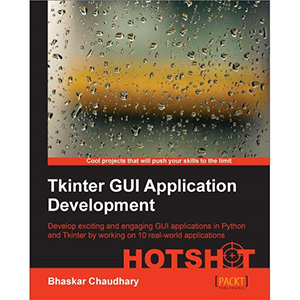
Tkinter GUI Application Development Hotshot

Posted: 29 Mar 2014 09:29 AM PDT

Book Description

Tkinter is the built-in GUI package that comes with standard python distributions. This means it is easy to get started right away, without any extra installation or configuration. Tkinter’s strength lies in its simplicity of use and its intuitive nature which makes it suited for programmers and non-programmers alike. Once you get started, you will be surprised to see how a few lines of code can produce powerful GUI applications.

Tkinter GUI Application Development Hotshot helps you learn the art of GUI programming – building real-world, productive and fun applications like text editor, drum machine, game of chess, media player, drawing application and many more. Each subsequent project builds on the skills acquired in the previous project. Also, learn to write multi-threaded and multi layered applications using Tkinter. Get to know modern best practices involved in writing GUI programs. Tkinter GUI Application Development Hotshot comes with a rich source of sample codes that you can use in your own projects in any discipline of your choice.

Starting with a high level overview of Tkinter that covers the most important concepts involved in writing a GUI application, the book then takes you through a series of real world projects of increasing complexity, developing one project per chapter. After you have developed five full projects, the book provides you with some bare-bone skeleton codes for a few functional but incomplete projects, challenging you to put your skills to test by completing them.

Finally, you are provided with tips for writing reusable, scalable, and quality GUI code for larger projects. The appendices provide a quick reference sheet for Tkinter.

What you will learn from this book

  • Structure your programs in the model-view framework
  • Persist your application data with object serialization
  • Work with external libraries and Tkinter extensions
  • Write multi-threaded GUI programs
  • Re-factor code at every stage of application development
  • Integrate your GUI applications to backend database
  • Use networking with your Tkinter program
  • Apply Internationalization to your GUI applications
  • Develop a GUI program framework for maximum code reuse and rapid application development

Approach
Practical, real-world example projects. Start with the topics that grab your attention or work through each project in sequence.

Who this book is written for
If you have just started with GUI programming, this book is ideal for you. This book is also great if you are an experienced software developer, scientist, researcher, engineer, student, or hobbyist.

Book Details

  • Paperback: 362 pages
  • Publisher: Packt Publishing (October 2013)
  • Language: English
  • ISBN-10: 1849697949
  • ISBN-13: 978-1849697941
Note: There is a file embedded within this post, please visit this post to download the file.

Related Books

The post Tkinter GUI Application Development Hotshot appeared first on Wow! eBook.

Building 3D Models with modo 701

Posted: 29 Mar 2014 09:26 AM PDT

Book Description

Computer generated graphics (CGI) are part of the design market. CGI helps digital designers from many industries to have a clear representation of their products before they are produced. To name a few, interior designers, architectural studios, and furniture designers can implement CGI images into their workflow, saving them time and money.

“Building 3D Models with modo 701″ will introduce you to the world of next generation 3D content creation in a practical manner. This will not be a software manual, but a real-world guide that will skip the unnecessary details and focus on what’s needed to complete a commission from a client. It will get you the best results in minimum time.

In this book you will learn the entire process, from a preliminary design to the final art. All the stages are covered. You will be guided through modeling, creating materials, placing lights, optimizing your render, and showing it to your customer in an efficient way.

You will learn how to quickly generate shapes and recreate real-world materials present in most of scenes: wood, metals, glass; along with working with textures and learning how to apply them convincingly. Create the mood of your scene by using lights, place the camera like a photographer would do to get that nice shot, and make a good quality realistic render and show it to your client with that extra punch of production that every pro should know.

“Building 3D Models with modo 701″ is not a user manual, but a step-by-step walkthrough of the real world of a 3D artist.

What you will learn from this book

  • Use the modeling tools to create your own objects
  • Mimic real-world materials in an easy way
  • Use images as textures to make more complex surfaces
  • Discover the pros and cons of the different lights used
  • Learn the use of the camera with real photographer tricks
  • Optimize your render settings
  • Enhance your image in Photoshop
  • Give your client a stunning looking image that sells itself

Approach
The book will focus on creating a sample application throughout the book, building gradually from chapter to chapter.

Who this book is written for
If you are new to the 3D world, this is the key to getting started with a modern software in the modern visualization industry. Only minimal previous knowledge is needed.

If you have some previous knowledge about 3D content creation, you will find useful tricks that will differentiate the learning experience from a typical user manual from this, a practical guide concerning the most common problems and situations and how to solve them.

Book Details

  • Paperback: 240 pages
  • Publisher: Packt Publishing (October 2013)
  • Language: English
  • ISBN-10: 1849692467
  • ISBN-13: 978-1849692465
Note: There is a file embedded within this post, please visit this post to download the file.

Related Books

The post Building 3D Models with modo 701 appeared first on Wow! eBook.


READ MORE - Wow! eBook: Learning Geospatial Analysis with Python - 6 new eBooks

Jumat, 28 Maret 2014

Wow! eBook: Play for Java - 4 new eBooks


Wow! eBook: Play for Java - 4 new eBooks

Link to Wow! eBook

Play for Java

Posted: 28 Mar 2014 07:31 AM PDT

Book Description

Play for Java shows you how to build Java-based web applications using the Play 2 framework. The book starts by introducing Play through a comprehensive overview example. Then, you’ll look at each facet of a typical Play application, both by exploring simple code snippets and by adding to a larger running example. Along the way, you’ll contrast Play and JEE patterns and learn how a stateless web application can fit seamlessly in an enterprise environment.

For a Java developer, the Play web application framework is a breath of fresh air. With Play you get the power of Scala’s strong type system and functional programming model, and a rock-solid Java API that makes it a snap to create stateless, event-driven, browser-based applications ready to deploy against your existing infrastructure.

Play for Java teaches you to build Java-based web applications using Play 2. This book starts with an overview example and then explores each facet of a typical application by discussing simple snippets as they are added to a larger example. Along the way, you’ll contrast Play and JEE patterns and learn how a stateless web application can fit seamlessly in an enterprise Java environment. You’ll also learn how to develop asynchronous and reactive web applications.

The book requires a background in Java. No knowledge of Play or of Scala is assumed.

What’s Inside

  • Build Play 2 applications using Java
  • Leverage your JEE skills
  • Work in an asynchronous way
  • Secure and test your Play application

Table of Contents
Part 1: Introduction and first steps
Chapter 1. An introduction to Play
Chapter 2. The parts of an application
Chapter 3. A basic CRUD application

Part 2: Core functionality
Chapter 4. An enterprise app, Play-style
Chapter 5. Controllers—handling HTTP requests
Chapter 6. Handling user input
Chapter 7. Models and persistence
Chapter 8. Producing output with view templates

Part 3: Advanced topics
Chapter 9. Asynchronous data
Chapter 10. Security
Chapter 11. Modules and deployment
Chapter 12. Testing your application

Book Details

  • Paperback: 320 pages
  • Publisher: Manning Publications (February 2014)
  • Language: English
  • ISBN-10: 1617290904
  • ISBN-13: 978-1617290909
Note: There is a file embedded within this post, please visit this post to download the file.

Related Books

The post Play for Java appeared first on Wow! eBook.

Learn Active Directory Management in a Month of Lunches

Posted: 28 Mar 2014 07:27 AM PDT

Book Description

Learn Active Directory Management in a Month of Lunches is a practical, hands-on tutorial designed for IT pros new to Active Directory. It skips the theory and concentrates on the day-to-day administration tasks you need to know to keep your network running smoothly. Just set aside an hour a day for a month—lunchtime would be perfect—and you’ll be comfortable and productive with Active Directory before you know it.

At the heart of your Windows network is Active Directory, the control center for administration, security, and other core management functions. If you’re new to Active Directory administration—or if you find yourself unexpectedly thrust into that role—you’ll need to get up to speed fast.

Learn Active Directory Management in a Month of Lunches is a hands-on tutorial designed for IT pros new to Active Directory. Without assuming previous administration experience, the book starts by walking you through the most important day-to-day system management tasks. You’ll learn how to administer AD both from the GUI tools built into Windows and by using PowerShell at the command line. Along the way, you’ll touch on best practices for managing user access, setting group policies, automating backups, and more.

This book assumes no prior experience with Active Directory or Windows administration. Examples are based in Windows Server 2012.

What’s Inside

  • ADM tasks you’ll need every day
  • GUI and command line techniques
  • Content tested by new administrators
  • Well-illustrated, clearly explained examples

Table of Contents
Part 1: Managing Active Directory Data
Chapter 1. Before you begin
Chapter 2. Creating user accounts
Chapter 3. Managing user accounts
Chapter 4. Managing groups
Chapter 5. Troubleshooting users and groups
Chapter 6. Managing computer accounts
Chapter 7. Managing organizational units

Part 2: Managing Group Policy
Chapter 8. Creating Group Policies
Chapter 9. Managing Group Policies
Chapter 10. Fine-grained password policies

Part 3: Managing the Active Directory service
Chapter 11. Creating domain controllers
Chapter 12. Managing domain controllers
Chapter 13. Protecting AD data
Chapter 14. Security: Default groups and delegation
Chapter 15. Managing DNS
Chapter 16. Managing sites and subnets
Chapter 17. AD replication
Chapter 18. Managing AD trusts

Part 4: Maintenance and Troubleshooting
Chapter 19. Troubleshooting your AD
Chapter 20. Maintaining and monitoring Active Directory
Chapter 21. Future work and final exam
Chapter 22. Into the cloud

Appendix A. Searching Active Directory
Appendix B. Migrations and upgrades

Book Details

  • Paperback: 400 pages
  • Publisher: Manning Publications (February 2014)
  • Language: English
  • ISBN-10: 1617291196
  • ISBN-13: 978-1617291197
Note: There is a file embedded within this post, please visit this post to download the file.

Related Books

The post Learn Active Directory Management in a Month of Lunches appeared first on Wow! eBook.

Kanban in Action

Posted: 28 Mar 2014 07:22 AM PDT

Book Description

Kanban in Action is a down-to-earth, no-frills, get-to-know-the-ropes introduction to kanban. It’s based on the real-world experience and observations from two kanban coaches who have introduced this process to dozens of teams. You’ll learn the principles of why kanban works, as well as nitty-gritty details like how to use different color stickies on a kanban board to help you organize and track your work items.

Too much work and too little time? If this is daily life for your team, you need kanban, a lean knowledge-management method designed to involve all team members in continuous improvement of your process.

Kanban in Action is a practical introduction to kanban. Written by two kanban coaches who have taught the method to dozens of teams, the book covers techniques for planning and forecasting, establishing meaningful metrics, visualizing queues and bottlenecks, and constructing and using a kanban board.

Written for all members of the development team, including leaders, coders, and business stakeholders. No experience with kanban is required.

What’s Inside

  • How to focus on work in process and finish faster
  • Examples of successful implementations
  • How team members can make informed decisions

Table of Contents
Part 1: Learning kanban
Chapter 1. Team Kanbaneros gets started

Part 2: Understanding kanban
Chapter 2. Kanban principles
Chapter 3. Visualizing your work
Chapter 4. Work items
Chapter 5. Work in process
Chapter 6. Limiting work in process
Chapter 7. Managing flow

Part 3: Advanced kanban
Chapter 8. Classes of service
Chapter 9. Planning and estimating
Chapter 10. Process improvement
Chapter 11. Using metrics to guide improvements
Chapter 12. Kanban pitfalls
Chapter 13. Teaching kanban through games

Appendix A. Recommended reading and other resources
Appendix B. Kanban tools

Book Details

  • Paperback: 360 pages
  • Publisher: Manning Publications (February 2014)
  • Language: English
  • ISBN-10: 1617291056
  • ISBN-13: 978-1617291050
Note: There is a file embedded within this post, please visit this post to download the file.

Related Books

The post Kanban in Action appeared first on Wow! eBook.

The Mikado Method

Posted: 28 Mar 2014 07:16 AM PDT

Book Description

The Mikado Method is a book written by the creators of this process. It describes a pragmatic, straightforward, and empirical method to plan and perform non-trivial technical improvements on an existing software system. The method has simple rules, but the applicability is vast. As you read, you’ll practice a step-by-step system for identifying the scope and nature of your technical debt, mapping the key dependencies, and determining the safest way to approach the “Mikado”—your goal.

The game “pick-up sticks” is a good metaphor for the Mikado Method. You eliminate “technical debt”—the legacy problems embedded in nearly every software system—by following a set of easy-to-implement rules. You carefully extract each intertwined dependency until you expose the central issue, without collapsing the project.

The Mikado Method presents a pragmatic process to plan and perform nontrivial technical improvements on an existing software system. The book helps you practice a step-by-step system for identifying the scope and nature of your technical debt, mapping the key dependencies, and determining a safe way to approach the “Mikado”—your goal. A natural by-product of this process is the Mikado Graph, a roadmap that reflects deep understanding of how your system works.

This book builds on agile processes such as refactoring, TDD, and rapid feedback. It requires no special hardware or software and can be practiced by both small and large teams.

What’s Inside

  • Understand your technical debt
  • Surface the dependencies in legacy systems
  • Isolate and resolve core concerns while creating minimal disruption
  • Create a roadmap for your changes

Table of Contents
Part 1: The basics of the Mikado Method
Chapter 1. Meet the Mikado Method
Chapter 2. Hello, Mikado Method!
Chapter 3. Goals, graphs, and guidelines
Chapter 4. Organizing your work

Part 2: Principles and patterns for improving software
Chapter 5. Breaking up a monolith
Chapter 6. Emergent design
Chapter 7. Common restructuring patterns

Appendix A. Technical debt
Appendix B. Setting the stage for improvements
Appendix C. Dealing with dynamically typed languages

Book Details

  • Paperback: 240 pages
  • Publisher: Manning Publications (Feburary 2014)
  • Language: English
  • ISBN-10: 1617291218
  • ISBN-13: 978-1617291210
Note: There is a file embedded within this post, please visit this post to download the file.

Related Books

The post The Mikado Method appeared first on Wow! eBook.


READ MORE - Wow! eBook: Play for Java - 4 new eBooks

Kamis, 27 Maret 2014

Wow! eBook: Mule in Action, 2nd Edition - 4 new eBooks


Wow! eBook: Mule in Action, 2nd Edition - 4 new eBooks

Link to Wow! eBook

Mule in Action, 2nd Edition

Posted: 27 Mar 2014 07:00 AM PDT

Book Description

Mule in Action, Second Edition is a totally-revised guide covering Mule 3 fundamentals and best practices. It starts with a quick ESB overview and then dives into rich examples covering core concepts like sending, receiving, routing, and transforming data.

An enterprise service bus is a way to integrate enterprise applications using a bus-like infrastructure. Mule is the leading open source Java ESB. It borrows from the Hohpe/Woolf patterns, is lightweight, can publish REST and SOAP services, integrates well with Spring, is customizable, scales well, and is cloud-ready.

Mule in Action, Second Edition is a totally revised guide covering Mule 3 fundamentals and best practices. It starts with a quick ESB overview and then dives into rich examples covering core concepts like sending, receiving, routing, and transforming data. You’ll get a close look at Mule’s standard components and how to roll out custom ones. You’ll also pick up techniques for testing, performance tuning, and BPM orchestration, and explore cloud API integration for SaaS applications.

Written for developers, architects, and IT managers, this book requires familiarity with Java but no previous exposure to Mule or other ESBs.

What’s Inside

  • Full coverage of Mule 3
  • Integration with cloud services
  • Common transports, routers, and transformers
  • Security, routing, orchestration, and transactions

Table of Contents
Part 1: Core Mule
Chapter 1. Discovering Mule
Chapter 2. Processing messages with Mule
Chapter 3. Working with connectors
Chapter 4. Transforming data with Mule
Chapter 5. Routing data with Mule
Chapter 6. Working with components and patterns

Part 2: Running Mule
Chapter 7. Integration architecture with Mule
Chapter 8. Deploying Mule
Chapter 9. Exception handling and transaction management with Mule
Chapter 10. Securing Mule
Chapter 11. Tuning Mule

Part 3: Traveling further with Mule
Chapter 12. Developing with Mule
Chapter 13. Writing custom cloud connectors and processors
Chapter 14. Augmenting Mule with orthogonal technologies

Appendix A. Mule Expression Language
Appendix B. Component and transformer annotations quick reference
Appendix C. Mule Enterprise Edition
Appendix D. A sample Mule application

Book Details

  • Paperback: 432 pages
  • Publisher: Manning Publications; 2nd Edition (February 2014)
  • Language: English
  • ISBN-10: 1617290823
  • ISBN-13: 978-1617290824
Note: There is a file embedded within this post, please visit this post to download the file.

Related Books

The post Mule in Action, 2nd Edition appeared first on Wow! eBook.

Gradle in Action

Posted: 27 Mar 2014 06:56 AM PDT

Book Description

Gradle in Action is a comprehensive guide to end-to-end project automation with Gradle. Starting with the basics, this practical, easy-to-read book discusses how to build a full-fledged, real-world project. Along the way, it touches on advanced topics like testing, continuous integration, and monitoring code quality. You’ll also explore tasks like setting up your target environment and deploying your software.

Gradle is a general-purpose build automation tool. It extends the usage patterns established by its forerunners Ant and Maven and allows builds that are expressive, maintainable, and easy to understand. Using a flexible Groovy-based DSL, Gradle provides declarative and extendable language elements that let you model your project’s needs the way you want.

Gradle in Action is a comprehensive guide to end-to-end project automation with Gradle. Starting with the basics, this practical, easy-to-read book discusses how to establish an effective build process for a full-fledged, real-world project. Along the way, it covers advanced topics like testing, continuous integration, and monitoring code quality. You’ll also explore tasks like setting up your target environment and deploying your software.

The book assumes a basic background in Java, but no knowledge of Groovy.

What’s Inside

  • A comprehensive guide to Gradle
  • Practical, real-world examples
  • Transitioning from Ant and Maven
  • In-depth plugin development
  • Continuous delivery with Gradle

Table of Contents
Part 1: Introducing Gradle
Chapter 1. Introduction to project automation
Chapter 2. Next-generation builds with Gradle
Chapter 3. Building a Gradle project by example

Part 2: Mastering the fundamentals
Chapter 4. Build script essentials
Chapter 5. Dependency management
Chapter 6. Multiproject builds
Chapter 7. Testing with Gradle
Chapter 8. Extending Gradle
Chapter 9. Integration and migration

Part 3: From build to deployment
Chapter 10. IDE support and tooling
Chapter 11. Building polyglot projects
Chapter 12. Code quality management and monitoring
Chapter 13. Continuous integration
Chapter 14. Artifact assembly and publishing
Chapter 15. Infrastructure provisioning and deployment

Appendix A. Driving the command line
Appendix B. Groovy for Gradle users

Book Details

  • Paperback: 480 pages
  • Publisher: Manning Publications (February 2014)
  • Language: English
  • ISBN-10: 1617291307
  • ISBN-13: 978-1617291302
Note: There is a file embedded within this post, please visit this post to download the file.

Related Books

The post Gradle in Action appeared first on Wow! eBook.

HTML5 in Action

Posted: 27 Mar 2014 06:51 AM PDT

Book Description

HTML5 in Action provides a complete introduction to web development using HTML5. You’ll explore every aspect of the HTML5 specification through real-world examples and code samples. It’s much more than just a specification reference, though. It lives up to the name HTML5 in Action by giving you the practical, hands-on guidance you’ll need to use key features.

HTML5 is not a few new tags and features added to an old standard—it’s the foundation of the modern web, enabling its interactive services, single-page UI, interactive games, and complex business applications. With support for standards-driven mobile app development, powerful features like local storage and WebSockets, superb audio and video APIs, and new layout options using CSS3, SVG, and Canvas, HTML5 has entered its prime time.

HTML5 in Action provides a complete introduction to web development using HTML5. It explores the HTML5 specification through real-world examples and code samples. It earns the name “in Action” by giving you the practical, hands-on guidance you’ll need to confidently build the sites and applications you—and your clients—have been wanting for years.

This book concentrates on new HTML5 features and assumes you are familiar with standard HTML.

What’s Inside

  • New semantic elements and form input types
  • Single-page application design
  • Creating interactive graphics
  • Mobile web apps

Table of Contents
Part 1: Introduction
Chapter 1. HTML5: from documents to applications

Part 2: Browser-based apps
Chapter 2. Form creation: input widgets, data binding, and data validation
Chapter 3. File editing and management: rich formatting, file storage, drag and drop
Chapter 4. Messaging: communicating to and from scripts in HTML5
Chapter 5. Mobile applications: client storage and offline execution

Part 3 Interactive graphics, media, and gaming…
Chapter 6. 2D Canvas: low-level, 2D graphics rendering
Chapter 7. SVG: responsive in-browser graphics
Chapter 8. Video and audio: playing media in the browser
Chapter 9. WebGL: 3D application development

Appendix A. HTML5 and related specifications
Appendix B. HTML5 API reference
Appendix C. Installing PHP and MySQL
Appendix D. Computer networking primer
Appendix E. Setting up Node.js
Appendix F. Channel messaging
Appendix G. Tools and libraries
Appendix H. Encoding with FFmpeg
Appendix I. HTML next
Appendix J. Links and references

Book Details

  • Paperback: 466 pages
  • Publisher: Manning Publications (February 2014)
  • Language: English
  • ISBN-10: 1617290491
  • ISBN-13: 978-1617290497
Note: There is a file embedded within this post, please visit this post to download the file.

Related Books

The post HTML5 in Action appeared first on Wow! eBook.

Ext JS in Action, 2nd Edition

Posted: 27 Mar 2014 06:47 AM PDT

Book Description

Ext JS in Action, Second Edition teaches Ext JS from the ground up. You’ll start with a quick overview of the framework and then explore the core components by diving into complete examples, engaging illustrations, and crisp, straightforward explanations. You’ll feel like you have an expert guide right at your elbow teaching you important Ext techniques and offering insight into its inner workings. Along the way, you’ll learn the best practices for building and scaling full-featured web applications, including how to customize and build Ext widgets. Fully revised for Ext JS 4.0.

Ext JS is a mature JavaScript web application framework that provides modern UI widgets and an advanced MVC architecture. It helps you manage tedious boilerplate and minimize hand-coded HTML and browser incompatibilities.

Ext JS in Action, Second Edition starts with a quick overview of the framework and then explores the core components by diving into complete examples, engaging illustrations, and clear explanations. You’ll feel like you have an expert guide at your elbow as you learn the best practices for building and scaling full-featured web applications.

A working knowledge of JavaScript is assumed. No prior experience with Ext JS is required.

What’s Inside

  • Building professional web apps with Ext JS
  • Stamping out DOM fragments with templates
  • Customizing and building Ext widgets
  • Masterful UI design
  • Fully revised for Ext JS version 4.0

Table of Contents
Part 1: Introduction to Ext JS 4.0
Chapter 1. A framework apart
Chapter 2. DOM manipulation
Chapter 3. Components and containers

Part 2: Ext JS components
Chapter 4. Core UI components
Chapter 5. Exploring layouts
Chapter 6. Forms in Ext JS
Chapter 7. The data store
Chapter 8. The grid panel
Chapter 9. Taking root with trees
Chapter 10. Drawing and charting
Chapter 11. Remote method invocation with Ext Direct
Chapter 12. Drag-and-drop

Part 3: Building an application
Chapter 13. Class system foundations
Chapter 14. Building an application

Book Details

  • Paperback: 408 pages
  • Publisher: Manning Publications; 2nd Edition (January 2014)
  • Language: English
  • ISBN-10: 1617290327
  • ISBN-13: 978-1617290329
Note: There is a file embedded within this post, please visit this post to download the file.

Related Books

The post Ext JS in Action, 2nd Edition appeared first on Wow! eBook.


READ MORE - Wow! eBook: Mule in Action, 2nd Edition - 4 new eBooks